At Hebei Maoxiang Technology’s 30,000-square-meter manufacturing facility, quality control isn’t just a step in production—it’s a philosophy embedded in every stage of crafting manual pallet jacks. Even the smallest components, from a single wheel bearing to the weld on a fork tip, undergo rigorous testing and inspection, ensuring that every unit leaving our workshop meets the highest standards of durability, safety, and efficiency. For our manual pallet jacks (showcased in Fig 3 and Fig 4), this commitment to precision begins long before assembly—and extends far beyond a final visual check.
Raw Material Screening: The Foundation of Reliability
Quality control starts with the materials we source. For the fork frames of our manual pallet jacks, we use Q235 carbon steel (compliant with GB/T 700-2006 standards), which undergoes tensile strength and yield stress testing before entering the workshop. Each steel sheet is inspected for surface defects, and samples are sent to our in-house lab to verify a minimum yield strength of 235 MPa—critical for supporting the 3-ton maximum load capacity of our standard models.
For the hydraulic system’s seals and gaskets, we select high-density polyurethane (PU) that meets GB/T 14687-2011 specifications. Every batch of seals is tested to withstand 1.5 times the system’s working pressure for 1 minute without cracking or leaking—a safeguard against hydraulic failure during heavy use. Even the nuts and bolts used in assembly are checked for torque resistance; we use 45# steel fasteners (per GB/T 699-2015) and verify that each bolt maintains its clamping force after 1,000 cycles of vibration testing.
Component-Level Testing: Precision in Every Part
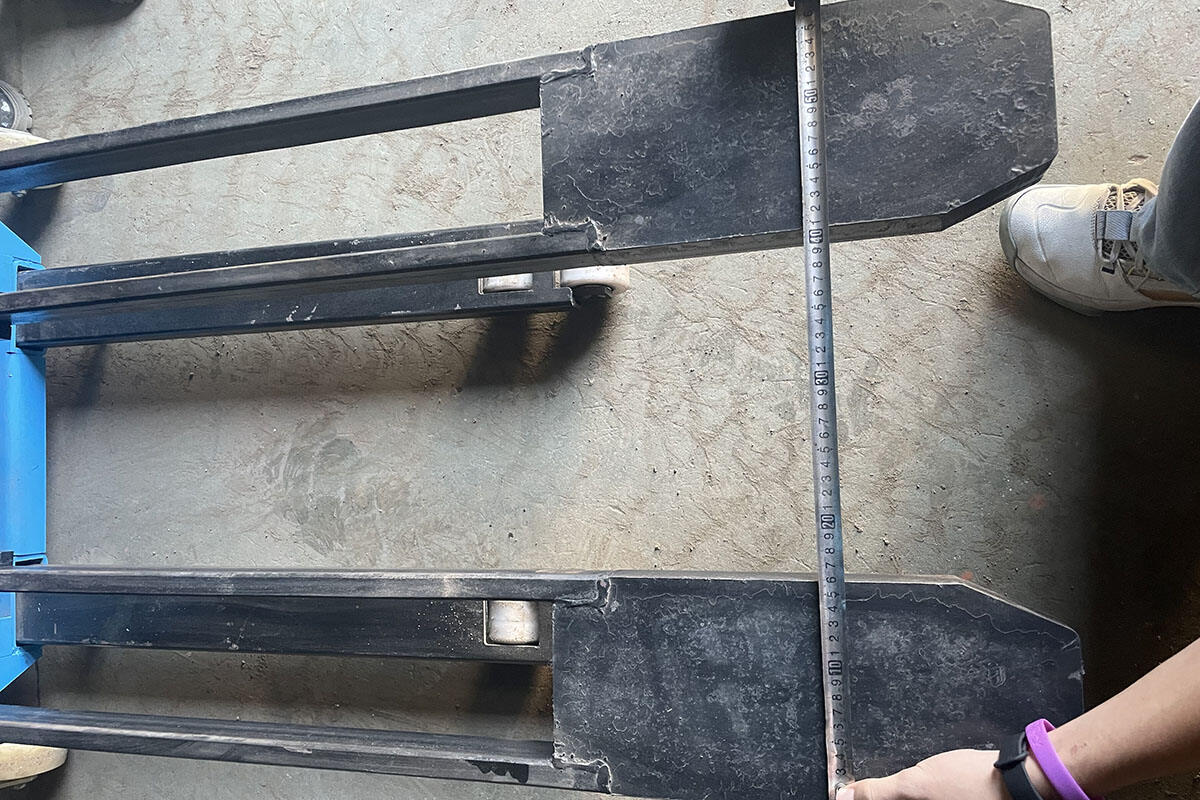
When it comes to the core components of our manual pallet jacks, no detail is overlooked. Take the forks: using digital calipers with a precision of ±0.01mm, our QC team measures fork length (standardized to 1,150mm for compatibility with ISO 6780 standard pallets) and thickness (8mm for optimal load distribution) across 5 points on each fork. Any deviation beyond 0.5mm results in the part being rejected. We also test fork straightness using a laser alignment tool; a deflection of more than 2mm over the full length of the fork would compromise load stability, so such units are reworked or discarded.
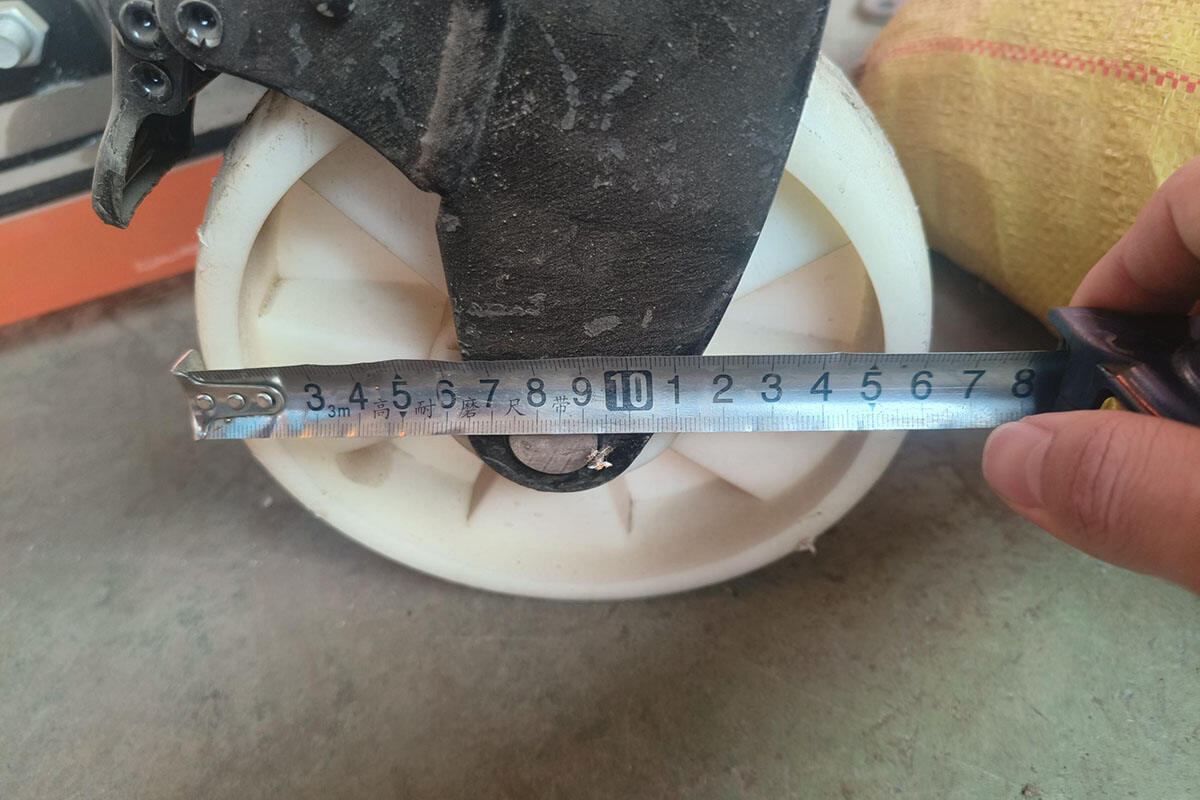
The high-wear wheels—one of the most critical components for maneuverability—undergo a battery of tests. First, we verify their dimensions: load wheels (180mm diameter) and steer wheels (200mm diameter) are measured to ensure compatibility with the frame’s axle spacing. Then, we subject them to load-bearing trials using a biaxial wheel test system (per SAE J2562 standards): each wheel is loaded with 1.4 times the pallet jack’s rated capacity (4,200kg for 3-ton models) and rotated for 10,000 cycles to simulate 300,000km of use. Wheels that show more than 2% deformation or develop cracks are rejected. Friction resistance is tested on a specialized conveyor belt rig: we measure the force required to move a loaded pallet jack across dry concrete, ensuring it stays below 150N (per GB/T 27690-2023) for easy operation by a single worker.
In-Process Inspection: Catching Issues Before Assembly
Assembly of our manual pallet jacks is overseen by manufacturing engineers who conduct hourly patrol inspections. For example, when welding the fork frame to the hydraulic housing, we use X-ray 探伤 (radiographic testing) to check for internal cracks or incomplete fusion—defects that could weaken the structure under load. The hydraulic pump, a critical component for lifting, is tested individually before installation: we verify that it can raise a 3-ton load 100 times without a drop in pressure, and that the pump’s 容积效率 (volumetric efficiency) exceeds 93% (per T/ZZB 2718-2022 standards).
Even the handle assembly, often overlooked in basic quality checks, is scrutinized. We measure the grip diameter (28mm, per ergonomic guidelines) and test the control lever’s responsiveness: it must switch between “lift,” “neutral,” and “lower” positions with a force of less than 8N, and return to neutral automatically when released. The handle’s welds are checked for shear strength, and we simulate 5,000 cycles of handle operation to ensure no loosening or fatigue.
Finished Product Testing: Ensuring Real-World Reliability
Once a manual pallet jack is fully assembled, it undergoes a series of end-to-end tests to replicate real-world conditions. First, a no-load test: we check that the forks rise and fall smoothly (no jamming) and that the steering system rotates 360 degrees without resistance. Next, a rated load test: we place a 3-ton weight (evenly distributed across the forks) and verify that the forks rise to 200mm (standard lift height) in fewer than 15 pump strokes, and that the natural slippage over 10 minutes is less than 2mm (per T/ZZB 2718-2022).
For durability, we run a 3,000-cycle reliability test: the pallet jack lifts and lowers the 3-ton load repeatedly, while being pushed and turned across a simulated warehouse floor (including 600 small obstacles to test wheel integrity). After this test, we inspect for hydraulic leaks, weld cracks, or wheel damage—any issue results in the unit being disassembled and repaired. Finally, we conduct a salt spray test (72 hours, 5% NaCl solution) to ensure the frame’s coating (a powder coat with 10-level corrosion resistance) meets GB/T 10125-2021 standards, protecting against rust in humid warehouse environments.
The Result: Pallet Jacks Built to Last
This uncompromising approach to quality control—from raw material screening to finished product testing—ensures that our manual pallet jacks are more than just tools: they’re reliable partners for daily material handling. For warehouses, distribution centers, and manufacturing facilities, this means less downtime, fewer maintenance costs, and a lower risk of workplace accidents. As a CCTV-recommended brand and a leader in China’s forklift industry, Hebei Maoxiang Technology doesn’t just build pallet jacks—we build equipment that customers can trust, backed by a 1-year warranty and a commitment to long-term performance.
In our workshop, every measurement, every test, and every inspection is a promise: to deliver manual pallet jacks that don’t just meet expectations, but exceed them—one meticulously crafted component at a time.
 EN
EN